
The Skin Benefits of Castor Oil
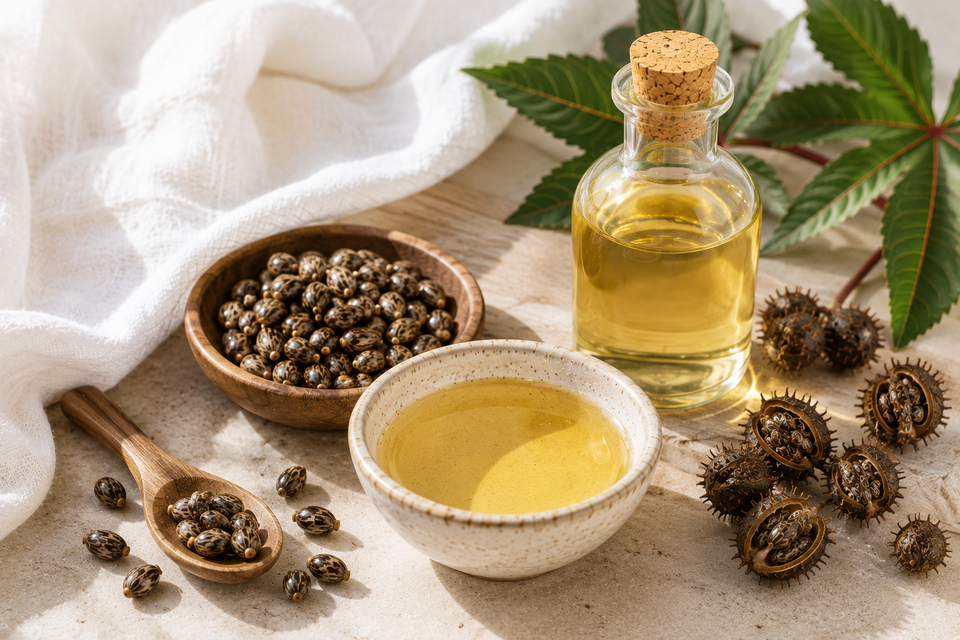
Imagine you’re reading the ingredient list on a handcrafted soap and notice castor oil among the first ingredients. You may already know it as a traditional beauty oil, but it raises an interesting question:
Why is castor oil used in so many skincare products?
The answer goes beyond its rich texture. Castor oil has long been valued in skincare because of its unique composition, which helps condition the skin and contributes to the performance of many cosmetic formulations. Understanding its role can help you better appreciate why it remains one of the most widely used plant oils in handcrafted skincare.
What Is Castor Oil?
Castor oil is a vegetable oil extracted from the seeds of the Ricinus communis plant. It is known for its naturally thick consistency and its high concentration of ricinoleic acid, a fatty acid that gives the oil many of its distinctive characteristics.
Unlike lighter plant oils, castor oil forms a protective, conditioning layer on the skin, helping reduce moisture loss and leaving the skin feeling soft and comfortable after cleansing. These qualities have made it a trusted ingredient in soaps, cleansing bars, balms, creams, and many other skincare products.
Why Is Castor Oil Used in Skincare?
Every ingredient in a skincare product serves a purpose, and castor oil is valued for more than one reason. Its rich texture helps support the skin’s natural moisture barrier, contributing to a smoother and more conditioned feel.
In handcrafted soaps, castor oil is especially appreciated because it helps create a creamy, stable lather that enhances the overall cleansing experience. Rather than simply cleansing the skin, it contributes to a rich foam that leaves the skin feeling comfortable after rinsing.
Its versatility also allows it to blend well with other plant oils, making it a common ingredient in formulations designed to provide a balanced combination of cleansing and conditioning properties.
What Makes Castor Oil Different from Other Plant Oils?
While many plant oils are used in skincare, castor oil stands out because of its unique composition and naturally thick consistency.
Lighter oils, such as sunflower or grapeseed oil, are often selected for their lightweight feel. Castor oil, on the other hand, provides a richer texture and plays a different role within a formulation. In handcrafted soapmaking, it is frequently included not only for its conditioning qualities but also for the creamy lather it helps produce.
Rather than replacing other botanical oils, castor oil complements them, allowing formulators to create products that offer a pleasant balance of cleansing, texture, and skin feel.
What Does This Mean When Choosing a Product?
Learning about ingredients like castor oil makes it easier to understand why different oils are combined in skincare formulations. Instead of assuming every plant oil performs the same function, you can begin recognizing how each ingredient contributes to the overall experience of using the product.
A thoughtfully formulated skincare product is the result of carefully selected ingredients working together, and castor oil is an excellent example of how one botanical oil can contribute to both the performance of a product and the way it feels on the skin.
At LUCREME, we carefully select the ingredients used in every formulation because each one should serve a meaningful purpose. Castor oil is one of the plant oils we value for its conditioning properties and for the rich, creamy lather it helps create in our handcrafted soaps.
Discover Our Products
Now that you’ve learned why castor oil is such a valued ingredient in skincare, we invite you to explore our collection of handcrafted skincare products and discover how we thoughtfully select the ingredients used in every LUCREME formulation.